A simple 30-minute bedtime routine for kids
A consistent bedtime routine is one of the most effective tools parents have, and not just for getting kids to sleep faster. It reduces the nightly battle that exhausts everyone. Here's what the research says, what a solid routine looks like, and how to make it stick.
Why Routines Work
Children's brains are pattern-recognition machines. When the same sequence of events happens every night, the brain starts treating that sequence as a signal: sleep is coming. Cortisol levels drop. Melatonin production ramps up. The transition from awake to asleep becomes smoother with each repetition.
Studies consistently show that children with consistent bedtime routines fall asleep faster, wake up less during the night, and get more total sleep than children without one. The American Academy of Sleep Medicine specifically recommends routines as a first-line strategy for childhood sleep problems, before any other intervention.
The other benefit is psychological. A predictable routine gives children a sense of control over the end of their day. They know what's coming, which reduces the anxiety that often turns "lights out" into a negotiation.
How Long Should It Be?
For most families, 20–45 minutes is the sweet spot. Long enough to actually wind the child down; short enough that parents aren't dreading it. A routine that takes 90 minutes isn't sustainable. If it's becoming a second shift, it needs to be simplified.
The exact duration matters less than the consistency. A 20-minute routine done every night at the same time will outperform an elaborate 45-minute routine that gets skipped whenever life is busy.
A Sample 30-Minute Routine
This is a starting point, not a prescription. Adjust for your child's age, temperament, and what you can realistically maintain.
7:30 PM: Start the wind-down signal
- 7:30: Device off, lights dimmed. The signal that the routine has started. No negotiating five more minutes; the routine starts now.
- 7:30–7:40: Bath or wash-up. Warm water lowers core body temperature afterward, which is a genuine sleep trigger. Not every night has to be a full bath; a quick wash works fine.
- 7:40–7:50: Pyjamas and brush teeth. Keep it calm. This is not the time for chase games or tickle fights.
- 7:50–7:55: One quiet connection moment. A short conversation about the day, a hug, a question about what they're looking forward to tomorrow. This is the emotional settling part of the routine.
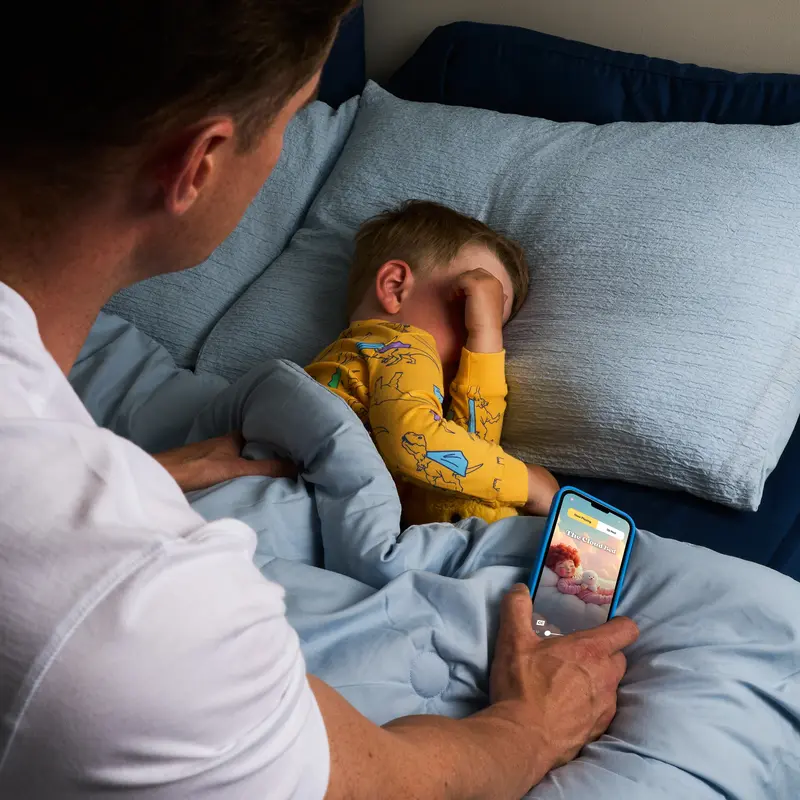
- 7:55–8:10: Audio story, lights off. Start a sleep story, lock the screen, and leave or sit nearby. The story does the rest.
- 8:10: Goodnight.
Age-by-Age Adjustments
Toddlers (1–3 years)
Keep it short, 20 minutes maximum. Toddlers respond strongly to physical cues (bath, pyjamas) and repetition. A consistent lullaby or short audio story helps condition the sleep association. Avoid anything stimulating in the 30 minutes before you start. The routine itself should feel calm and unhurried.
Preschool (3–5 years)
This age loves ritual. They want the same story in the same order with the same goodnight phrase. Lean into that. Let them make small choices within the routine (which pyjamas, which story). It gives them agency without giving them control over whether the routine happens.
Early school age (6–9 years)
Kids this age can start to understand why the routine exists, which makes them more cooperative when you explain it. Build in slightly more time for conversation. Audio stories remain effective at this age; children often prefer longer, more complex narratives. Some nights they'll fall asleep before the story ends; other nights they'll listen to three in a row. Both are fine.
Preteens (10+)
Routines become more negotiated at this age. The core elements (consistent bedtime, device-off window, wind-down activity) are still important, but the activity might shift from stories to reading, journaling, or a short mindfulness exercise. The key is keeping the consistent bedtime and the pre-sleep buffer from screens.
The Role of Audio in Bedtime Routines
Audio is one of the most underused tools in bedtime routines. Unlike books or visual media, audio content doesn't require light, doesn't stimulate the visual cortex, and can continue playing after a child's eyes close. A child who is half-asleep can keep listening, and often that's exactly the bridge they need to get all the way there.
The best audio content for bedtime is paced to slow down as the story progresses, uses a calm, unhurried narration style, and ends gently rather than with a sudden stop. Goldminds stories are built with this in mind. Each one is designed to walk a child from engaged listening to quiet drowsiness to sleep, without the parent needing to monitor the process.
Tip: Start the audio story with the lights already off. If you wait until they're in bed to start the story, you're still in transition mode. Starting the story as you dim the lights makes the audio itself part of the sleep-onset signal.
Common Problems (and Fixes)
"They keep getting up after I leave."
Usually a sign they're not fully wound down when you leave, or they don't feel confident you're nearby. A predictable audio story that they know will play through helps. It replaces the need to call out. If they know a story is playing and will continue, they have a reason to stay in bed and listen.
"They say they're not tired."
Consistent wake times are as important as consistent bedtimes. If a child is sleeping in on weekends, they won't be tired at the same time on Monday. The routine will only work as well as the overall sleep schedule it's embedded in.
"The routine takes forever."
Trim it. Every step that isn't essential is a step that can become a stall tactic. A tight 20-minute routine is more effective than a 60-minute one that keeps getting extended. Identify the two or three things that actually help your child settle and build those in; cut the rest.
"It worked for a month and now it doesn't."
Normal. Developmental shifts, illness, travel, and seasonal changes in light can all temporarily disrupt a routine. The answer is to re-establish it consistently, usually within a week or two. The routine itself isn't broken; the conditioning just needs to be refreshed.
Looking for the right audio content to anchor your routine? See our roundup of the best kids sleep apps, or try Goldminds with free bedtime stories.


Also see: Children's Sleep Tips · Mindfulness for Children · Best Apps for Toddlers
Every Night, a New Adventure Awaits
Whether you're just starting your bedtime routine or looking to enrich it with fresh, screen-free content, Goldminds is here to help. With our ever-growing story library, offline listening, and a deep commitment to imaginative, mindful rest, we’re more than a sleep app. We’re a bedtime tradition in the making.
Download Goldminds