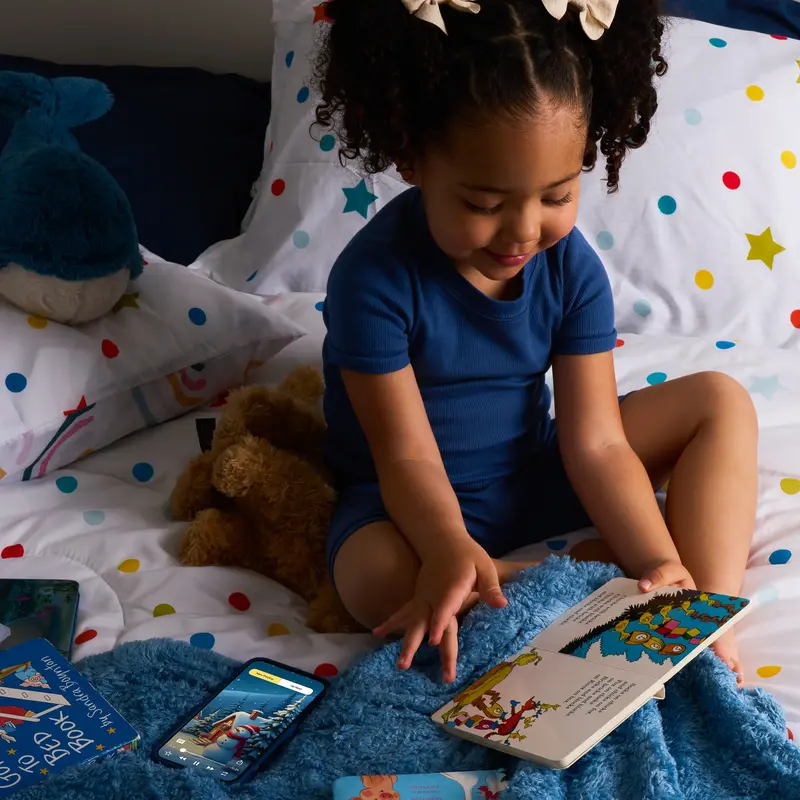
Kids’ sleep tips for calmer bedtimes
Sleep is foundational to everything: mood, learning, immune function, growth. When kids aren't sleeping well, nobody is. Here are the tips that actually move the needle, backed by sleep research and tested by parents who've been through it.
The Core Principles
Most kids sleep problems trace back to a small set of causes: inconsistent timing, too much stimulation too close to bedtime, screens disrupting melatonin, and an environment that isn't conducive to sleep. Fix those, and most other problems sort themselves out.
The tips below are ordered roughly by impact. Start with the first few if you're overwhelmed. Small changes compound quickly when it comes to sleep.
Keep wake time consistent, even on weekends
This is the single highest-leverage change most families can make. Wake time anchors the entire circadian rhythm. When kids sleep in on weekends, bedtime naturally shifts later, and by Sunday night they're not tired at their school-week bedtime. The result is a mini jet lag every Monday.
A 30-minute variance is fine. More than that, and you'll fight the schedule all week. Consistent wake time beats consistent bedtime as the mechanism. Bedtime tends to follow naturally when wake time is locked.
Start screens off 60 minutes before bed
Blue light from screens suppresses melatonin production, the hormone that signals the brain to prepare for sleep. For children, whose melatonin production is more sensitive than adults', the effect is more pronounced. Research suggests the impact can delay sleep onset by 30–60 minutes even after a child is in bed.
The fix isn't complicated: move screen time earlier in the evening and replace it with something less stimulating: bath time, conversation, a book, or an audio story. The transition will feel abrupt for the first few days; after a week it becomes routine.
Make the room dark and slightly cool
The body's sleep-onset mechanism involves a drop in core temperature. A room that's slightly cool (65–68°F / 18–20°C) supports this process. Light is the biggest disruptor of melatonin. Even small amounts coming under a door can suppress it. Blackout curtains are among the highest-ROI purchases for families dealing with early wake-ups or summer sleep disruption.
If a child is afraid of the dark, a very dim nightlight (warm-toned, not blue-white) is a fine compromise. The goal is dim, not pitch black.
Build a consistent pre-sleep routine
A 20–30 minute bedtime routine done at the same time every night conditions the brain to begin its sleep preparation during the routine itself, before the child even gets into bed. Bath, pyjamas, and a wind-down activity (reading, an audio story) in the same order, night after night.
The routine works because of repetition, not complexity. A simple routine done consistently beats an elaborate one done occasionally. See our full bedtime routine guide for a sample structure.
Use audio instead of visual content at wind-down
Audio content (a story, a podcast, calming music) engages the mind without stimulating the visual system or requiring light. A child can close their eyes, relax their body, and keep listening. Many children fall asleep mid-story, which is exactly the goal.
The key difference from books or videos: there's nothing to look at, which removes the physical stimulation of holding a book or being in front of a screen. Audio at bedtime is one of the most underused and effective tools available to parents.
Watch the sugar and food timing
A large meal or sugary snack within an hour of bed spikes blood sugar and then triggers a dip that can cause early wake-ups (typically 2–4 AM). If your child is waking in the middle of the night, consider what and when they're eating in the evening. A small, protein-and-fat-focused snack (cheese, peanut butter, banana) an hour before bed is better than a sweet snack close to lights-out.
Address anxiety before it becomes a sleep problem
Anxiety is one of the most common hidden causes of childhood sleep difficulty. Kids who stall at bedtime, ask for "one more thing," or can't stay in bed often aren't being difficult. They're managing anxiety. The stalling is a strategy.
A brief "worry dump" before bed (ask them to name one thing that felt hard today) can help. Audio stories are also effective here because they give the mind something to follow instead of looping on anxious thoughts. Imaginative content that ends calmly is better than silence for anxious kids.
Don't put them to bed overtired
It seems backwards, but overtired children are harder to put to sleep, not easier. When a child is overtired, cortisol spikes and it takes much longer for them to settle. The phrase "sleep begets sleep" is real.
If bedtime battles are escalating, try moving bedtime 20–30 minutes earlier for a week. For many families this is the counterintuitive fix that breaks the cycle.
Get outside in the morning
Morning light exposure within 30–60 minutes of waking is one of the most effective circadian anchors there is. It signals to the brain that the day has started, which sets the timer for when melatonin will rise again that evening. Even 10 minutes outside on a cloudy day delivers more light signal than indoor lighting.
This is a daytime habit with bedtime payoffs. Kids who get morning light exposure tend to fall asleep faster and more easily in the evening.
Be patient and consistent
Most sleep improvements take 1–2 weeks of consistent effort before they become self-sustaining. The temptation to abandon a new approach after 2–3 difficult nights is the most common reason sleep interventions fail. If something isn't working after two full weeks of consistency, that's the time to reassess. Not after night three.
How much sleep do kids need? Toddlers (1–2 yrs): 11–14 hours including naps. Preschool (3–5 yrs): 10–13 hours. School age (6–12 yrs): 9–12 hours. Teens (13–18 yrs): 8–10 hours. Most school-age children are getting less than they need. The gap shows up as mood, focus, and behavior problems long before it shows up as tiredness.
A consistent bedtime routine anchored by calming audio is one of the most effective combinations for improving children's sleep. Try Goldminds free for 7 days. No commitment, cancel any time.


Also see: Bedtime Routine Guide for Parents · Mindfulness for Children · Best Sleep Apps for Kids
Every Night, a New Adventure Awaits
Whether you're just starting your bedtime routine or looking to enrich it with fresh, screen-free content, Goldminds is here to help. With our ever-growing story library, offline listening, and a deep commitment to imaginative, mindful rest, we’re more than a sleep app. We’re a bedtime tradition in the making.
Download Goldminds